Looking for a CIC Powerbox Alternative?

If you searched for a CIC (commercial & industrial) powerbox, you're shopping the wheeled, site-grade class of battery power — the kind you roll onto a construction site, telecom tower or remote camp and plug in. Here is the framework we give buyers deciding between a generic CIC box, the NovaBESS PowerBox, a diesel generator and a consumer portable power station.

What a CIC Powerbox Actually Is

The category, and why it is its own buying decision.

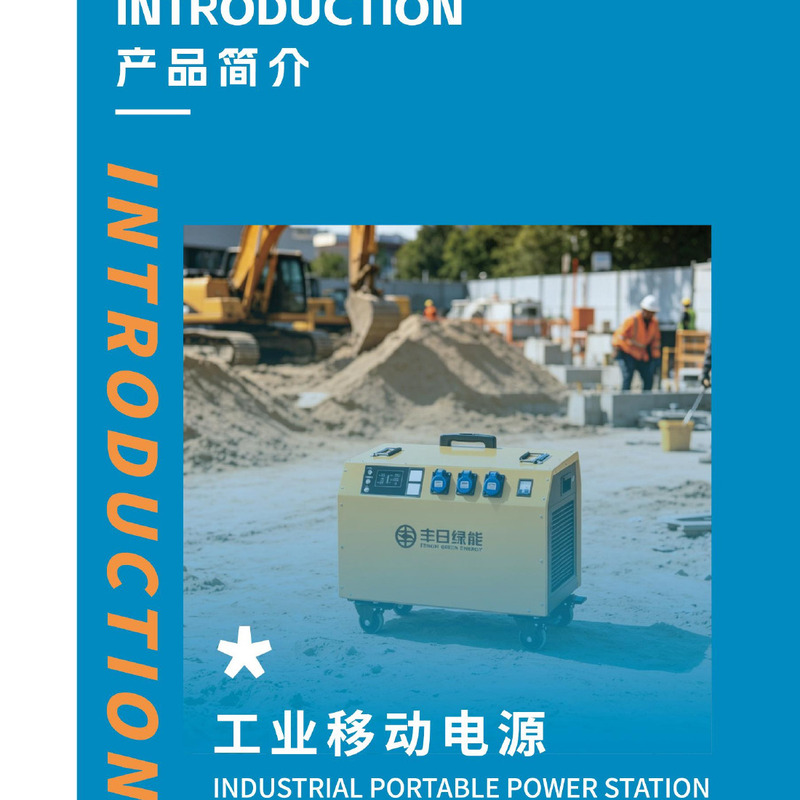
A CIC powerbox is a wheeled, industrial portable power station: a LiFePO4 (or sometimes unspecified lithium) battery in a rugged enclosure with its own outlets, no fixed installation. It is the middle ground between a wall-mounted home battery (permanent, wired) and a diesel generator (fueled, loud, fume-producing). Buyers reach for it when the load is temporary, mobile or off-grid and they want power in minutes without an electrician, permit or fuel run.

That single sentence already rules some options in and others out. The four realistic alternatives below cover almost every commercial & industrial scenario — and the honest answer is that no single one wins them all. The job is to match the option to the duty.

Four Options, Side by Side

Indicative comparison — verify the latest specs and marks with each supplier before purchase.
Dimension Generic CIC box (off-the-shelf) NovaBESS PowerBox Diesel / gas generator Consumer portable station
Capacity Varies widely (1–10 kWh typical) 4.02 / 8.04 / 16.08 kWh effectively unlimited while fueled (2–10 kW common) 1–3.6 kWh (rarely site-grade)
Continuous power Often unspecified 500 / 1,000 / 1,500 W 2,000–10,000+ W 1,000–3,600 W (surge)
Mobility Wheeled, quality varies Wheeled, 26 / 57 / 100 kg Wheeled / frame, heavy Carry handle, <20 kg
Noise & fumes Silent, fume-free (battery) ≤75 dB(A), fume-free, indoor-safe 85–100+ dB, exhaust / CO Silent, fume-free
Charging / fuel Usually wall only Wall + solar + generator (3 sources) Diesel / petrol, refuel runs Wall / solar (some)
Chemistry Unspecified / mixed LiFePO4, 314 Ah cells n/a (engine) Usually NMC / LFP mix
Certifications Sometimes basic CE only CE · UN38.3 · UL · IEC 62619 Emissions regs, not battery certs CE / UL (consumer)
Maintenance Low, support unclear Low, manufacturer-backed Oil, filters, servicing Low
Best for Cost-first, low-risk loads Temp / mobile / off-grid C&I loads Days-long prime power Personal / light use
Indicative cost ~$400–1,500 Quote-based — see $/kWh calculator
typically $400–900/kWh equipment
~$500–3,500 + fuel ~$1,000–3,500

Figures are indicative and vary by market, capacity and order volume. NovaBESS specifications are from the manufacturer catalog (PowerBox: 4.02 / 8.04 / 16.08 kWh, 12.8 / 25.6 / 51.2 V, 500 / 1,000 / 1,500 W, LiFePO4 314 Ah, 80%–100% DoD, air-cooled, ≤75 dB(A), CE / UN38.3 / UL / IEC 62619). Generic CIC boxes and consumer stations are described as a category; confirm named cells, BMS and certifications with any supplier before import or site use.

The Four Options, Honestly

Where each one wins — and where it doesn't.

Generic CIC box

Cheapest entry into the category, and fine for low-consequence loads. The catch is usually the unknowns: unnamed cells, unspecified BMS, and certifications that may not clear customs or satisfy an insurer.

✓ Lowest up-front price

✗ Certs / support often unclear

NovaBESS PowerBox

Named LiFePO4 cells, full CE / UN38.3 / UL / IEC 62619 marks, and a 40-year manufacturer behind it. Charges from wall, solar or generator. The pick for temp / mobile / off-grid C&I work — and for distributors wanting a white-label model.

✓ Certified, supported, multi-source

✗ Quote-based, not a $99 import

Diesel / gas generator

Still the king of days-long, whole-site prime power. But it is loud, exhaust-producing, needs fuel runs and servicing, and cannot run safely indoors.

✓ Unlimited runtime while fueled

✗ Noise, fumes, maintenance, fuel

Consumer portable station

Brilliant for personal and light use — quiet, clean, easy to carry. But capacity and build are not site-grade, and most lack the certs and duty rating for commercial deployment.

✓ Light, cheap, user-friendly

✗ Not rugged / certified for C&I

What to Consider Before You Choose

The checklist that actually separates a good buy from a risky one.

1. Certifications. For export and site use, look for CE, UN38.3 (transport), UL and IEC 62619. UN38.3 is what clears batteries through customs by air and sea — without it, a "cheap" box becomes an expensive problem at the border.
2. Cell chemistry. LiFePO4 (LFP) is the safe, long-life choice for stationary and industrial use. If a supplier won't name the cells, that is the answer.
3. Charging sources. Wall-only charging strands you on a multi-day job. Three-source charging (wall + solar + generator) keeps a remote site powered with no fuel run.
4. DoD & cycle life. 80–100% depth of discharge and thousands of cycles decide your real lifetime cost — not the headline kWh.
5. Safe use. A portable unit powers appliances through its own outlets only and must never be back-fed into a building's distribution panel — unsafe and, in most regions, illegal. For whole-site backup, size a fixed, commissioned system.
6. Support & OEM/ODM. A 40-year manufacturer with after-sales and a white-label program is a different proposition from an anonymous listing — especially if you plan to sell under your own brand.
Which Should You Pick?

Match the option to the duty — most commercial buyers end up with a mix.

Temporary, mobile or off-grid site

Roll-in, plug-in power for construction, telecom, mining, emergency and remote O&M → NovaBESS PowerBox. Fast, quiet, fume-free, certified.

Permanent base load / peak shaving

A fixed cabinet or container BESS is the right tool for solar, peak shaving and whole-site backup → see our Commercial & Industrial BESS line.

Days-long prime power

Whole-site, continuous duty for days → a diesel / gas generator still wins on runtime. Keep a PowerBox alongside for silent, indoor-safe sensitive loads.

Personal / light use

Camping, vanlife, a laptop and a fridge at home → a consumer portable station is the simpler, cheaper fit. Step up to PowerBox only when duty goes site-grade.

Why Buyers Land on the NovaBESS PowerBox

Honest positioning: not the cheapest box, but the one built for the job and the border.

If your loads are temporary, mobile or off-grid, PowerBox is the option that removes the three things generators and imports can't: noise and fumes indoors, uncertain certifications, and no path to your own brand. It runs on named LiFePO4 cells, carries CE / UN38.3 / UL / IEC 62619, recharges from wall, solar or generator, and is offered as a proven white-label model through our OEM / ODM program.

NovaBESS PowerBox 16 kWh wheeled industrial portable power station

See the PowerBox C&I Page

CIC Powerbox Alternative FAQ

What is a CIC powerbox and do I need one?

A CIC (commercial & industrial) powerbox is a wheeled, site-grade portable power station built for places where fixed wiring is impractical — construction sites, telecom and cell towers, mines, emergency repair and remote O&M. You need one (rather than a residential unit or a generator) when the load is temporary, mobile or off-grid and you want silent, fume-free power you can roll in and plug in within minutes.

Is a NovaBESS PowerBox better than a cheap generic CIC box?

For most professional buyers, yes. A generic off-the-shelf CIC box is often cheaper up front, but the cells, BMS and certifications are frequently unspecified, which is a real risk for export, insurance and site safety. NovaBESS PowerBox uses named LiFePO4 314 Ah cells, carries CE / UN38.3 / UL / IEC 62619, and is backed by a 40-year manufacturer with OEM / ODM and after-sales support. If you are a distributor or brand owner, the white-label option is the bigger differentiator than price alone.

Can a CIC powerbox replace a diesel generator?

For most temporary and sensitive loads, yes. A battery powerbox is silent (≤75 dB(A)), fume-free and indoor-safe — it runs inside a site office, workshop or tent where a diesel generator cannot. It will not match a generator for days-long, whole-site prime power, but for tools, lighting, comms, pumps and backup it removes fuel, noise and exhaust. Many operators keep one of each for different duty cycles.

How do I choose between 4, 8 and 16 kWh?

Match capacity to your duty cycle, not the headline number. The 4.02 kWh (500 W) unit covers light tools, comms and lighting; the 8.04 kWh (1,000 W) suits a site office and mixed tools; the 16.08 kWh (1,500 W) runs a full shift of mixed site load. Because PowerBox charges from a wall socket, solar array or generator, a multi-day job stays powered without a fuel run — so size to the load, not to the longest possible outage.

Can I private-label a CIC powerbox under my own brand?

Yes. The NovaBESS PowerBox is a proven white-label model in our OEM / ODM program — your logo, label and packaging, with minimal engineering overhead. We also support custom variants (capacity, enclosure, BMS, CAN / RS485 protocol). That is the path most distributors, rental fleets and brand owners take instead of relabeling an unspecified import box.

CIC Powerbox Alternatives by Region

The global framework above, localized for your market.

Compare PowerBox Against Your Shortlist

Tell us your duty cycle and target market — we'll size the model, confirm certifications for your region, and quote branded or OEM supply.